Photo by John Robertson / Pexels
Thinking about, planning, or actually moving abroad can be incredibly stressful. You’re holding a lot of different emotions at once: excitement and hope, but also grief, sadness, and hard goodbyes. There’s perspective, but also endless bureaucracy. Holding all of that at the same time is taxing on your whole system. That’s exactly why being mindful about your self-care and stress-relieving routines matters so much when you’re moving through a life transition like this one. It’s how you keep the stress at bay.
This isn’t just in your head. A 2025 study on the well-being of expat partners found that perceived stress, isolation, and cultural distance all take a measurable toll during international relocation (Aegerter et al., 2025). Self-care isn’t a nice extra here. It’s part of how you get through the move intact.
What Is Self-Care (And What It Isn’t)?
Self-care means actively taking care of your physical and emotional needs, not just treating yourself. It’s often pictured as face masks and wellness retreats. Those can be part of it, but other forms matter just as much, sometimes more:
- Drinking enough water and eating nutritious food
- Prioritizing sleep and moving your body
- Practicing mindfulness
- Setting healthy boundaries with yourself and others
- Saying no when you need to
- Taking care of your own emotions and needs
Self-care doesn’t always feel good. Sometimes it’s saying no to a task or an appointment because it would be too much for the day. Sometimes it’s putting up a boundary. Sometimes it’s going out for a walk in the rain because your body needs the movement more than your mood wants to stay on the couch.
The starting point is making sure your basic needs, food, water, sleep, and connection, are met, then working your way up: safety, relationships, self-esteem, and finally self-actualization. That’s Maslow’s hierarchy of needs in short, and a more recent revision keeps the same logic while sharpening it for how people actually prioritize needs day to day (Kenrick et al., 2010).
Self-care means taking care of yourself and your needs, and having this hierarchy in mind helps a great deal when you’re deciding where to start.
Why Does Self-Care Feel So Guilty?
High-achievers, caretakers, and people-pleasers especially struggle with guilt after taking time for themselves. I understand why. Sitting down to read a book can feel almost like wasted time when everyone else seems to be hustling or struggling.
For a move specifically, there’s an extra layer to it. When you’re in the middle of a big relocation, there’s a million things to take care of, plus a lot of anxiety and anticipation about what’s ahead. That takes an enormous amount of energy. But because the move is also exciting and full of promise, it can feel hard to admit that it’s draining you too. Choosing something doesn’t mean you give up your right to be exhausted, stressed, or drained by exactly the thing you chose. Both can coexist, and in a lot of life circumstances, they do. Letting yourself be tired by something you chose doesn’t mean you want it less, and it doesn’t mean you stop doing it. It just means the thing you’re doing is allowed to be both beautiful and hard at the same time.
The analogy I use most often in session is the one from the airplane safety demonstration: put your own oxygen mask on before you help anyone else with theirs.
Why? Because if you faint from lack of air, you can’t help anyone. Taking care of yourself isn’t a nicety, it’s a necessity. You’re no help to anyone when you’re running on fumes. Research backs this up: one study on family caregivers found self-care was the single strongest factor protecting against burnout, ahead of the caregiving demands themselves (Kwon & Hong, 2021).
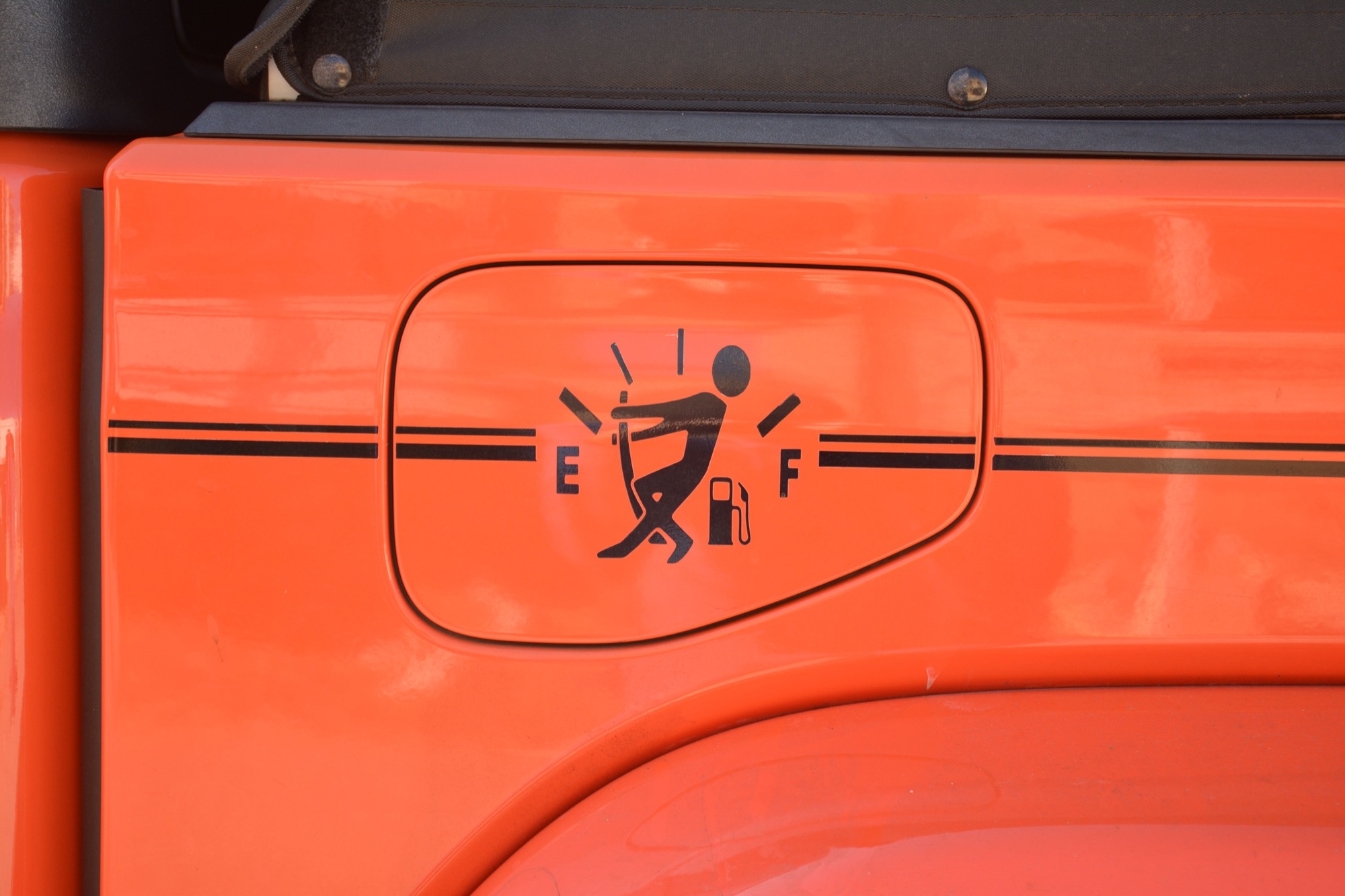
The phrase I hear most from clients in these moments is, “I’ll rest once it’s done.” But you wouldn’t say that to a car whose tank is already in the emergency zone. You wouldn’t tell it, “we’ll fill up once we arrive.” That’s the surest way to end up pushing the car the rest of the way to the next gas station. If you wait until the move is finished to rest, you’re not managing your energy, you’re gambling with it.
So if self-care is this important, why the guilt afterward? Often, it’s because somewhere along the way, we learned that taking care of ourselves is selfish. It’s worth looking at those patterns: when they started, what circumstances shaped them, and how you’ve carried them since. Feeling guilty doesn’t mean you are guilty, the same way feeling angry doesn’t mean you need to act on it. The message underneath the emotion is often just an old pattern you learned somewhere along the way. It was probably helpful once. It might not be anymore.
Next time the guilt shows up, try talking yourself through it instead of just pushing past it. Ask yourself: what evidence do I actually have that I should feel guilty? Often there isn’t any. It’s just that you’re doing something new and uncommon for you. The guilt is a signal that you’ve stepped outside your usual pattern, not proof that you’ve done something wrong. Remind yourself that you’re allowed to take care of yourself, and that this isn’t the only thing you do; you still show up for other people too. Repeat that to yourself, again and again. Over time, it gets easier to keep taking time for yourself and prioritizing your health, instead of it feeling like a one-off exception every time.
Self-care doesn’t turn you into a selfish, self-centered, or narcissistic person who only cares about themselves. It means finding the balance between taking care of yourself and taking care of others.
How Do You Practice Self-Care While Moving Abroad?
Start by making it a priority. That can mean prioritizing sleep, nutrition, and hydration first, the low-hanging fruit. Build an evening routine that helps you wind down, and set a consistent time for getting up and going to bed. Make sure you’re eating and drinking enough to actually fuel your body. Adding a stress-relief strategy like journaling, movement, or meditation can help you process everything a move stirs up.
It doesn’t have to be a lot. Sometimes it’s more realistic to have a few small check-ins with yourself scattered through the day than one big self-care block you never get to.
A few things can help you build the habit. I like the Finch app, which feels a bit like a tamagotchi for your own self-care (welcome, 90s kids). It gamifies taking care of yourself. If that feels too playful, plenty of habit trackers can remind you to check in on yourself instead.
Or keep it simple: use your calendar app to set reminders throughout the day for different self-care activities. Another trick that works well: tell the people close to you that you’re working on your self-care, so they can gently remind you too.
In Short
Self-care isn’t a reward you earn once everything else is done, it’s part of what keeps you functioning while you handle everything else. During a big move, you’re allowed to feel both excited and drained by the same thing at once. The guilt that shows up when you take time for yourself is usually an old pattern, not proof that you’re doing something wrong. Put your own oxygen mask on first, refuel before the tank hits empty, and let self-care be as non-negotiable as everything else on your list.
You’re Allowed to Be Tired By Something Good
It’s okay to feel strained when you’re doing something new. It’s okay to feel stressed and grateful for the same opportunity, at the same time. Humans aren’t one-dimensional, we’re multi-layered, and a move abroad asks a lot of every layer at once.
Next time you feel bad for needing to rest, think of the car you refuel without a second thought, because it needs that fuel to keep going. That’s what self-care is for humans. You need energy to be able to spend energy.
Sources
- Kenrick, D. T., Griskevicius, V., Neuberg, S. L., & Schaller, M. (2010). Renovating the pyramid of needs: Contemporary extensions built upon ancient foundations. Perspectives on Psychological Science, 5(3), 292-314. https://doi.org/10.1177/1745691610369469
- Kwon, J. H., & Hong, G. R. S. (2021). Influence of self-care on burnout in primary family caregiver of person with dementia. Journal of Korean Academy of Nursing, 51(2), 217-231. https://doi.org/10.4040/jkan.20274
- Aegerter, K. H., Meyer, A. H., Gaab, J., & Ooi, Y. P. (2025). Expatriation stressors and the well-being of accompanying partners: a commonality analysis approach. Frontiers in Psychology, 16, 1607178. https://doi.org/10.3389/fpsyg.2025.1607178